

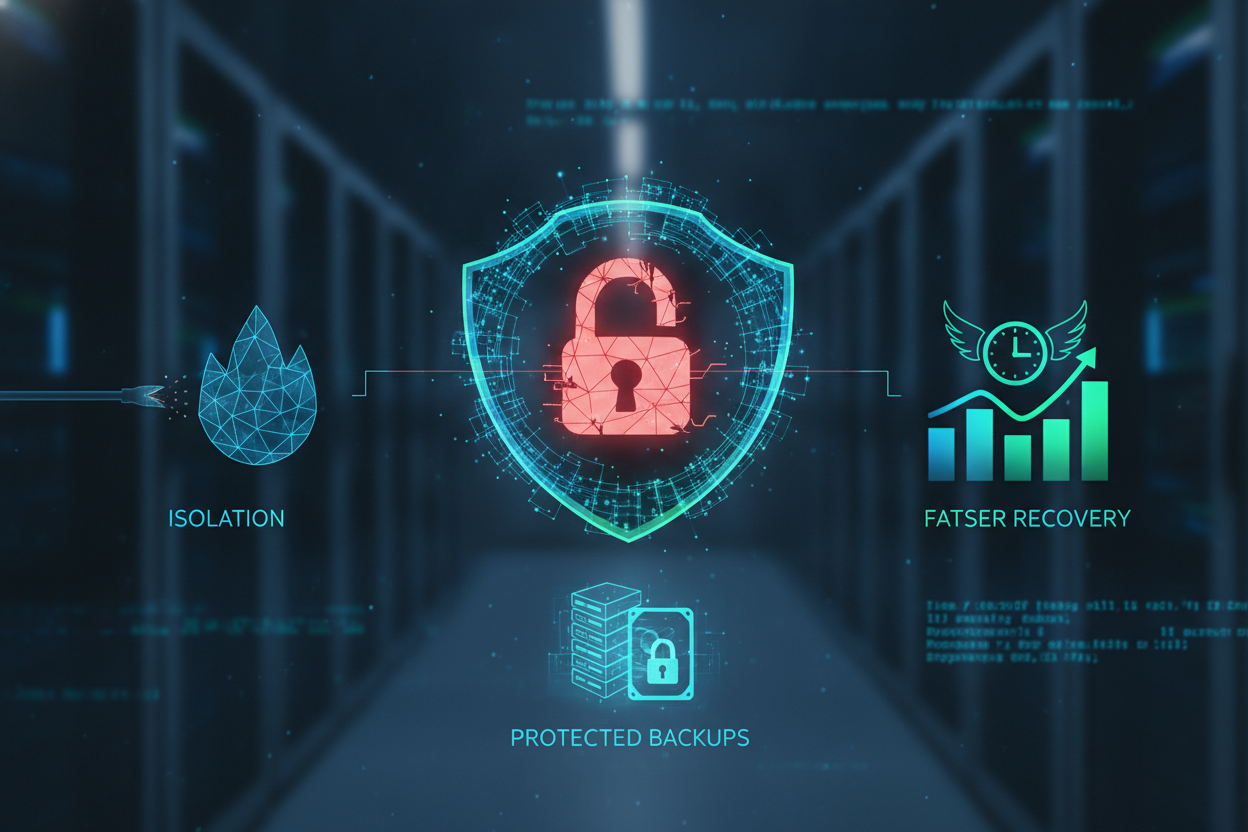
Ransomware is one of the most disruptive threats organizations face because it can lock access to critical data and interrupt operations almost instantly. A strong response plan does not guarantee that an attack will never happen, but it can drastically reduce the damage and speed up recovery.
The first priority is containment. If encryption activity or suspicious behavior is detected, affected systems should be isolated quickly to limit spread. Clear reporting channels matter here, because hesitation can turn a manageable incident into a broader crisis. Every team member should know who to contact and what steps to take immediately.
Backups are the next line of defense, but they only help if they are reliable and protected. Offline or immutable backups are especially valuable because attackers may try to compromise connected storage. Testing restores regularly is just as important as creating backups in the first place. A backup that cannot be restored under pressure is not a real safety net.
Communication also matters. Internal teams, customers, and partners may need timely updates, especially if service interruption affects them. A prepared incident communication plan helps maintain credibility during a stressful event and reduces confusion.
Recovery should end with review, not just restoration. Teams should analyze how the attack entered the environment, what controls failed, and how monitoring can improve. Ransomware preparedness is ultimately about resilience. The organizations that plan ahead are better equipped to recover quickly and protect trust when pressure is highest.
Leave a Reply